|
|

Posts: 16632
Location: The desert | Do you believe muskies become conditioned? For example, to seeing certain things over and over. | |
| | |

Posts: 129
Location: Milwaukee Wi | I think so i mean why not its there suroundings they have to have some memory | |
| | |

Posts: 193
Location: Mayer, MN | I say no, we give them too much credit.  | |
| | |
Posts: 8880
| I think so. You can "train" a goldfish to come to the edge of the tank when you walk up, that's conditioning... Stands to reason that muskies would have the same ability. I presume you are talking about lures/pressure, which obviously would work against us as anglers. On the other side of the coin, conditioning can probably work in our favor, when muskies become conditioned to seeing boats and learn to ignore them. | |
| | |
Posts: 1168
| Anglers are conditioned to think that muskies get conditioned. | |
| | |
Posts: 8880
| True, but if you do an internet search for "conditioned responses in fish" you'll find a whole lot of scientific studies that illustrate how various species of fish become conditioned to stimuli of many sorts. | |
| | |
Posts: 1168
| So where is the tipping point between conditioned fish and conditioned fishermen? When does one outweigh the other? The scientific studies are intriguing however those are in a controlled environment. Take a high traffic/pressure lake such as Pewaukee and will a fish be more easily conditioned there or in a lab? I don't doubt that fish do become wary of baits, I just feel that when it comes to conditioning we often fail to consider the human conditioning that also tends to occur.
Edited by ulbian 2/22/2008 1:00 PM
| |
| | |
| Darwinism and Natural Selection.
Yes they do. | |
| | |
Posts: 785
| I'd say no but I tell you what, when you go to a remote portage lake in Canada that has almost no fishing pressure and compare musky behavior there to lakes that see a lot of people its hard not to believe in conditioned fish.
They may not be smart but even ducks (fairly stupid creature) learn to avoid those big clumps (duck blinds) out in the marsh after they've been shot at a few times. | |
| | |
Posts: 159
Location: Stevens Point, WI | Absolutely. It's more than just an excuse to buy new lures, the fish remembers how that sky blue jackpot moved last time it went over her her head, and she might just follow it around this time instead of smacking it. Some of the little lakes like Bone and Mission and Deer have muskies that see 20 lures a day, and it's custom to see a bunch of follows without getting a hit until you find a way to work it that they haven't seen before. | |
| | |
Posts: 714
Location: Rhinelander, WI | As I wrote earlier on a different message board.
In my opinion conditioning is not a simple correlation to one item; it’s most likely the sum of the total environment. With a couple items peaking the positive or negative experience “memory”.
Conditioning does not have to be to the complicated level of training a dog. It could be as simple as “Mood Modification”. The more often an active fish is “messed with” the more likely it is to be come less aggressive. If a fish can be turned from aggressive to neutral or even negative by our actions it is being conditioned. Not to the level of Pavlov’s Dog, but defiantly to some actionable level. On the reverse side something that doesn’t trip a level of anxiety (flight response), and allows them to make the decision to commit to the offering could be very beneficial when dealing with pressured fish.
Remember were talking specific situations here, not every fish in the system. Some will always eat some wont. But if the goal is to have a chance at every fish encountered then conditioning should be thought about.
Nail A Pig!
MIke
| |
| | |
| When I leave the city to go to the country I see the same type of behavior in people vs. muskies in remote lakes vs. high pressure lakes:) Anyhow I don't think you can control enough variables to condition muskies in a lake. If you can figure out how to control the weather let me know I want to be your boat partner for sure. For example if you could teach a fish what a lure is, I bet with the right weather conditions it will still bite it.... | |
| | |
Posts: 8880
| Ulbian, this is just my theory; no scientific evidence to back this up:
We tend to think Muskies become conditioned to seeing lures and actually know they are lures, with hooks, attached to an angler on the other end. Obviously anthromorphism at its finest, there.
Conditioned responses are much more primitive than that, and exist only to serve the basic functions -- eat, survive (avoid being eaten) and reproduce. I'll use the example of double cowgirls to illustrate... something they hadn't quite seen, felt, or heard before that stimulates the lateral line, the visual, and auditory sense in a way that triggers a feeding response. Over time, it would stand to reason that these stimuli, paired together, will evoke enough unsucessful feeding responses that conditioning will occur, and muskies will be less apt to respond. Do they know what it is? I doubt that very much. But on some level, they have become conditioned to it and "know" that it's not food. But then they're predatory fish after all, they'll get hungry tomorrow and try to eat it anyway.
What I don't know is how long that conditioning takes, how many times it needs to happen, or perhaps more importantly how long is that conditioned response viable? Is it a week? A month? One season to the next? Forever?
I'll agree with you that as anglers we really tend to overemphasize conditioning. If it was the be all end all, baits like a Suick, Topraider, or bulldawg wouldn't catch fish anymore.
| |
| | |
| Visit any lake in MN during musky season and how could the fish not be conditioned to the bombardment of lures????? Its simply a no brainer. | |
| | |
Posts: 366
| I think that all creatures adapt and evolve to their surroundings and conditions as things change over really long periods of time. I feel like we humans really over estimate our impact on the world and our environment, especially for the fraction of time we've been around. Not saying we don't have an impact, but it seems to be the natural tendency to over exagerate our effects. I think that we can have an effect on individual fish or animals as they do employee survival instincts that react to predators and other threats for a limited amount of time, until those individuals are redirected or effected by other influences. At the same time I don't think anyone can deny the difference in fishing an untouched virgin canadian lake versus the average midwest reservoir and what we percieve as stupid fish versus the smart trained fish. Fish can be conditioned, yes, but by what and why is very debateable. Memory versus conditioning? Fish do have fish brains, so interpreting the hows and whys is nothing but educated guessing. We don't truly understand how the human mind works, let alone animals or fish, but amazing everyone seems to think that they do.
Ryan | |
| | |
Posts: 2117
| Steve Wright - 2/22/2008 1:17 PM
Visit any lake in MN during musky season and how could the fish not be conditioned to the bombardment of lures????? Its simply a no brainer.
So I am the 5th (or maybe the 50th  ) boat in line on Mille Lacs north end the fish I am just about to catch has seen exactly 1,239 DCG's go by her face today alone......oops its 5 minutes to moonrise fish on !!!! Nothing in muskie fishing is a no brainer....fish eat when they want to... ) boat in line on Mille Lacs north end the fish I am just about to catch has seen exactly 1,239 DCG's go by her face today alone......oops its 5 minutes to moonrise fish on !!!! Nothing in muskie fishing is a no brainer....fish eat when they want to... | |
| | |
Posts: 1168
| Addict,
I'm not saying that muskies cannot be conditioned. My whole point is that we tend to overlook the conditioning that takes place in anglers. I guess it might also be lumped into the whole "self fulfilling prophecy" idea. What creates a confidence bait? Something you had success with earlier, right? So you throw that confidence bait more and more. Here's an example of conditioning with this.... In late fall a guy throwing topwater over weedflats because "that's where I moved one in July." There could have been a fish there in the fall, but there was absolutely no consideration given to seasonal patterns or movements. When we didn't see a fish on that area this guy attributed it to; "guys pound this spot all the time so the muskies holding here had to be spooked or bait shy." Again, no consideration given to seasonal movements.
My uncle used to fish muskie tournaments quite successfully. His go to technique was to fish channels and areas with heavy boat traffic. His idea was that those fish are so used to disturbances by jetskis, pontoons, boats, etc. that they will not be spooked by a bait going through them. Added to that was his simple comment of; "and no one fishes it because they think the fish are scared off by boat traffic when in fact they are used to it." So here he was tapping into a relatively unfished goldmine because no one else was on it due to the spook factor. In this instance I would say those fish were conditioned to our liking in that they were used to the heavy boat traffic. I've begun dabbling in areas that fit this description and it seems to hold true that the fish are not scared off by it, but the fishermen are. Hitting a few of these spots with trusted friends of mine they look at me like I've been sipping on grandpa's moonshine. They never gave it any thought because there was too much boat traffic, too much commotion. But those fish were consistently there and ready to eat. The reasons given why they wouldn't even think about areas like that suggests that they are conditioned not to fish it and in return missed out on a bonanza.
| |
| | |
Posts: 8880
| As far as how WE become conditioned? LOL, we're stupider than fish in that regard! You're absolutely right there. I do it too. Someone I trust tells me something, no matter how wacky it sounds, and I believe it because of who said it. PLENTY out there that is us being conditioned to believe one thing or another, when reality was little more than "casted lure to spot holding hungry fish"... I mean Jeeez, I even have a lucky hat. Lucky? HAT??? Doesn't get any dumber than that! | |
| | |
Posts: 1168
| esoxaddict - 2/22/2008 2:43 PM
As far as how WE become conditioned? LOL, we're stupider than fish in that regard!
That's probably a better way to put it..."humans are conditioned but it's called stupidity." hehehehe.
| |
| | |

Posts: 32979
Location: Rhinelander, Wisconsin | No. | |
| | |
Posts: 159
Location: Stevens Point, WI | I like what you guys are saying about fishermen conditioning, but here's another thought. I grew up fishing trout and smallies in Wisconsin. I backpack to lakes in Montana and Idaho and catch a trout out of there, let it go, and the same trout turns right back around and eats my spinner 15 seconds after i released it. I've seen the same thing with smallmouth in some parts of Canada. Are these just genetically inferior fish that have yet to be eaten by a fisherman, or does it have something to do with them never seeing a lure before? Can we translate these events with trout and bass to muskies?
Edited by 12gauge 2/22/2008 2:23 PM
| |
| | |
Posts: 8880
| 12 gauge,
It's a bit of a matter of how long does conditioning take. I've caught fish (not muskies) several times, which would lead me to the same conclusions. But a bit of digging into the research thats out there proves that fish CAN become conditioned. The fact that the people that run the hatcheries have to wean the fish off pellets and transition them to live prey so they learn to hunt and not wait for handouts, I'd say that's all the proof you need right there. The fact that greater numbers of hatchery fish lack the predator aviodance skills needed to avoid being eaten is another wait on the "yes" side of the scale for me as well.
Steve, you say "no"? Care to elaborate? If I know you, you probably have some evidence or research in your back pocket.
| |
| | |
| Steve gives a whole seminar on this topic and it is quite convincing for sure. Also I don't think domesticating of a fish in the hatchery has much to do with conditioning. They are only tapping into the natural instincts that is already present in the fish when they attempt to switch the fishes diet. That really proves nothing...Now if they could make a wild fish stick to a pellet diet in a wild lake, I would consider that proof...but we both know that would not happen.... | |
| | |
| What about moving the conditioning discussion out of the 'they see 100 lures' a weekend context? I bet muskies are conditioned to spawn at a certain time and certain area. They proabably grow to learn what spots have the bait at what times etc, where to sit for the best eating oportunities. I wonder if 'instinct' is different than 'conditioned.' I wonder if instincts are different in hatchery fish versus wild ones. Stocked rainbows hear a boat coming and a series of loud bangs, it means the feed conveyor is about to start. Best way to get these fishthru the ice is punch holes until they come around. Sitting real quiet doesn't work as well. They're conditioned to know noise=man bring food pellets. I think muskies shying away from lures in general probably has a bit to do with a new hot one being on the shelves and being thrown more than the old hot one. A #5 Mepps still works, so do Cowgirls. Both wil always interest fish enough to put them in their mouth. Muskies are rarer to see and catch than bass or walleye. You can test theories on thirty bass a day. Muskie encounters are less common than with other fish, and rules and trends can seem a lot more obvious and important than they really are and vice versa. With lake trout, it's not uncommon for us to release sixty fish a wknd from two to thirty pounds from April thru June and they DO switch on and off colours and lure styles very, very cleary. You can run through 6 or 8 trout in quick order before that bait has to be switched out. You can usually come back to it later in the day but once they stop liking it, you may as well troll without hooks. In many areas, I can get a fish on withing five minutes of a bait change after beating an area thoroughly, its pretty amazing. Best way to get the fish going again is within a few minutes of a new colour, shape or style of bait going over the side. Same lead length, same speed, same depth, same side of the boat, same rod and reel. When a lot of fish are coming over the side, paterns,rules and generalizations are easier to make, in my opinion. I guided a season out of Red Lake ON a few years ago and the walleyes did the same thing.. catch 18 in a row on a twister, the fish stop, tie on a tube and start all over on another 18. | |
| | |
Posts: 32979
Location: Rhinelander, Wisconsin | D&D has the right track going, read the last few lines about changing the lure...
Stimulous/response.
If the fish were 'conditioned' in the sense of the question here to do/not to do anything, C&R would not work because we would not recapture any muskies. | |
| | |
Posts: 1168
| Changing baits, colors, fish seeing many baits in a weekend or through the course of the season...and yet when a fish hits what I am throwing I end up thinking to myself; "why did that fish hit that bait at that time?" The stupidity in me makes me psychoanalyze a dang fish. I can't help it..
However, why do muskies strike? Hunger? Reaction? Fear? Pointer caught one in my boat on a bucktail that just hit the water. The blade couldn't have even started turning. So what made that fish hit? Was it ticked off that his bait landed on it's head?
Is there an advantage in focusing on what a muskie will eat or focusing on just ticking it off enough to strike? Getting away from the conditioning question...oh well. But I personally love those days where everything we've read in magazines are supposed to be "tough." Give me a post frontal bluebird sky day, toss a healthy algae bloom, and I'm stoked. You've got the water to yourself because people are "conditioned" to think that no muskie could be caught that day. Tactics are definately geared towards just harrassing them enough so that they go for the kill rather than go for the meal.
As for catching a fish over and over. It could be related to that fear response. I've had the same fish in my boat within 8 hours of each other. The second time I would contribute it to a fear response. The "I'm not hungry, I just want to kill whatever just made me mad" response. We're giving fish too much credit, their brains aren't that big but yet after 7 years of college and 2 degrees later I still feel the need to sit them down on the comfy couch and ask them what they are thinking so I can better understand the wave of emotions they had when they saw or felt that bait come into his or her domain. | |
| | |
Posts: 1504
Location: Oregon | I think without a doubt they become conditioned on pressured waters. I was watching a show the other night about saltwater predatory fish. When the predator fish were young they would repeteadly attempt to consume fish that were either poisonous or contained spines of some kind that prevented them from being swallowed. But once the predatory fish were adults, they no longer attempted to eat unsafe fish and would swim right next to them without displaying any interest in feeding whatsoever.
If fish are able to distinguish the difference between a "safe fish to eat" and a "not safe fish to eat" it seems logical that they could also learn to avoid hazardous fishing lures.
RM
Edited by RiverMan 2/22/2008 3:28 PM
| |
| | |
Posts: 32979
Location: Rhinelander, Wisconsin | How many exposures does an individual Muskie have over it's lifetime to actually getting captured on THE SAME EXACT lure?
Describe 'conditioned' for me, does that mean they have 'learned' not to hit, or that they are more difficult to catch for some other reason?
| |
| | |
| How many of you out there have multiple DUI's? multiple speeding and parking tickets? Multiple marriages?
Conditioning does not mean you are going to take ONE experience and learn a life lesson from it. It may take many times for a fish being caught to figure out that the double bladed pink thing swimming in the water is not food. Did they eat it or attack it. there is a difference and a different topic.
All species over generations addapt to there surroundings and muskies are not different.
Once again, Charles Darwin and his take on Natural Selection sums it up pretty simply.
Yes conditioning exists. If you are switching patterns to catch fish then you are too.
Brian Maxey | |
| | |
Posts: 8880
| If there was a lake that had never been fished before, no human presence whatsoever, presumably anything small enough to eat that was moving in that water would be food, 100% of the time.
Oh a highly pressured lake, we have lots of lures, thrown by lots of anglers, a great deal of the time. Now, there is a fairly significant percentage of what's moving through the water that is not food.
"Exposure" doesn't have to be actually being caught on a lure in this case. The lure is there, whether the muskies in question eat it, swipe at it, follow it, or are simply aware of it going past there is a change in the environment that theoretically should alter their behavior.
So "conditioned" in this case I guess would be "less apt to try to eat a lure due to being repeatedly exposed to their presence in the environment."
Here's something I've noticed that maybe some others can comment on... When I am fishing the Yahara chain (Madison), I never have fish follow more than once. In places where there are far fewer anglers, I see the same fish on back to back casts, sometimes you can raise the same fish 4 or 5 times. Madison? I get one. And usually they don't even come all the way to the boat, much less follow a figure 8. Happens like that on the Fox Chain too. I suppose it could be coincidence, but it seems like the less a place gets fished the more interested the fish are in seeing what that lure is all about. | |
| | |
Posts: 101
Location: mn | I think muskies become conditioned to boats not baits. I do think fisherman are conditioned when it comes to what lure to toss or buy ect. I think its more about how hungery or how angery the fish is at your bait for being there. Weather, sun, moon, ect......opportunity feeders. I read an article a few years back about bass becoming conditioned To topwater. Not sure what I think of that either. Just opinions not facts | |
| | |
Posts: 1168
| esoxaddict - 2/22/2008 5:07 PM
Here's something I've noticed that maybe some others can comment on... When I am fishing the Yahara chain (Madison), I never have fish follow more than once.
Just a wild guess here...perhaps they see you, think you're funny looking, then go back to their friends and laugh at your expense. hehehehehe. | |
| | |
| we as muskie fisherman are only changing baits or colors because the fish have becomed conditioned. If not we would always throw the same bait.
take tonka for example. pressure, pressure, pressure.
two years ago you had to beat fish off with a stick if you were throwing dc10's.
more pressure, more cowgirls over the next season and the % of fish caught on cowgirsl goes down.
We as anglers have become conditioned but only becasue the fish did first.
Another example would be day vs night fishing. Some lakes are just better in either situation. why? some of the lakes in the metro have so much pressure that if you want the BEST chance at catching a big fish you better be out at night. again this shows how we as anglers adapt to the fish adapting.
| |
| | |
Posts: 41
| Fish can't be conditioned. If they could, no one would ever catch a 50+ fish on a bucktail. DC excluded since they are so "new". With the popularity of topwater baits, wouldn't fish tend to stay deeper in the water column and not eat on the surface? If so, you wouldn't be able to catch fish on topwaters.
Edited by JZDANK1 2/22/2008 4:31 PM
| |
| | |
| no. | |
| | |
Posts: 101
Location: mn | good points maxey. | |
| | |
Posts: 8880
| You know something, you might be right! Funny, but the girls act the same way in the more pressured urban establishments compared to the more remote places, especially the further North you go... | |
| | |
| heck yah they do...not sure if the right word is conditioned or what but they do adapt, change behavior etc over time, getting caught, etc...
| |
| | |
Posts: 3167
| If you want a serious online 'chat'!!!
get in touch with the doctor of animal behavior that works for Berkley/purefishing
hes done all kinds of tests in fish tanks on how once a fish 'bass" get caught, on how its attitude changes and how they also will shy away from preveious negative experiences,,
weve tried to get him has a speaker for our Twin Cities Muskies inc chapter but he only speaks a couple times a year, he was recomended to us bt one of Berkleys pro staff,,Id love to hear what he has to say | |
| | |
Posts: 13688
Location: minocqua, wi. | esoxaddict - 2/22/2008 4:33 PM
You know something, you might be right! Funny, but the girls act the same way in the more pressured urban establishments compared to the more remote places, especially the further North you go... ;-)
hey ... if you're seeing "girls up north" ... they are on vacation and what happens on vacation ... ah, the ever-popular girls weekends.
oh, and muskies ... yeah, if you pound em they change behavior | |
| | |
| A couple guys have nailed it already: we condition each other and thus how WE fish and then try to pin it on the muskie! Fishing pressure where I fish in basically nil, but I think that fish---even the dumb, big, wild ones---can get hip to the game. On a couple spots , we've had serious attemepts from big ones. Their effort drops off significantly after we've had them up a few times. Your best shot at them will be those first couple encounters. There's a real heavy one on the French River that shows up more and more every trip but never as hot as those first coupla times. On all baits, at all times of day, under all kinds of conditions. Just when we think she's been clubbed, she'll show up for us. She will make a mistake...that's why we fish the spot so much. I think the discussion re: crowded, smaller lakes in the US is a whole other can of worms. I can just imagine the pounding they take, and I think new presentations and new scheduling would make all the difference in the world in many cases. You guys have so much more innovation intackle etc than Cdns because I truly beleive that fish do see and feel the whole catalogue on some lakes. New stuff gets bit, and switching gears becomes all the more important. Big water is where I have always fished and I'm nowhere near as turned off or intimidated by it as I am high-pressure lakes. Especially with muskies, high traffic and high pressure just seems to make a tough climb even steeper to me. Not to mention wear and tear o the fish, handling etc. | |
| | |
Posts: 1168
| happy hooker - 2/22/2008 5:53 PM
hes done all kinds of tests in fish tanks on how once a fish 'bass" get caught, on how its attitude changes and how they also will shy away from preveious negative experiences,,
Studies done in a controlled environment...a tank. How controlled is a lake, river, reservoir, etc?
About how many times through the course of a year is a 50 inch muskie caught? I'm guessing not many. So with so few times being caught how would that fish relate that as a negative experience? Even a smart dog has to have it's nose rubbed in it's own crap a few times before it gets it and is conditioned.
Not all good night lakes are that way because of pressure. One that I am familiar with is virtually untouched, awesome night bite out there, leaves alot to be desired during the day. Go about 5 miles down the road to another lake that gets hammered with recreational traffic and pressure and it is consistently good during the day but is tough at night.
Perhaps "conditioning" is a misleading term to use when "adaptation" would offer more flexibility. | |
| | |
Posts: 714
Location: Rhinelander, WI | The first of 26 definitions of “Life”:
“the condition that distinguishes organisms from inorganic objects and dead organisms, being manifested by growth through metabolism, reproduction, and the power of adaptation to environment through changes originating internally.”
Maxey said it best, if conditioning didn’t occur we would only need one lure. Every thing smaller would be considered food, because there would be NO survival instinct. If there was no conditioning to the environment there would only be the instinct to survive.
verb con•di•tioned, con•di•tion•ing, con•di•tions
7. Psychology - To cause an organism to respond in a specific manner to a conditioned stimulus in the absence of an unconditioned stimulus.
As I stated previously, I doubt it’s as simple as “O…..NO the green suick again” It is more likely that there is some stimulus connection with the colors, the sounds, the feel(lateral line) or some combination. And it all depends on MOOD, meaning whatever they have that triggers them to feed or not to feed. A strong feeding mood will override the smaller conditioned survival instincts. Which is why we can still catch them after being caught many times. You will never convince me that the more they get caught doesn't make them harder to catch.
Muskies small brains are pretty much geared 100% to survival, what are they most likely to remember? Negative experience!
Nail A Pig!
Mike
Edited by MRoberts 2/22/2008 5:20 PM
| |
| | |
Posts: 41
| Fish have to eat. If a fish relates eating with a bad experience and chooses not to eat, it dies. If a fish relates a pattern or color to a negative experience, It would also die. What colors do we fish with? Perch, bluegill, crappie, sucker, redhorse, etc... Does a muskie see a fish and think, Oh, that's type/color of food is bad? I don't think so . I think these fish are being given WAY to much credit. If they were half as smart as we think they were, we would catch them a couple times and that would be it. How big is a muskies brain? The size of a peanut. No matter how many times a fish is caught on a bulldawg, it will bite again. EVERYONE throws dawgs in IN for muskies and there aren't too many muskies around. If fish could be conditioned, I would sell all my dawgs. | |
| | |
Posts: 366
| So if fish are not conditioned then, two lakes with similar population and forage bases, as well as structure and water clairity. One that gets pounded all season long, and the other never sees a boat. Both lakes will produce the same probability for an individual to go out and catch a fish. The whole notion of Canadian lakes being easier to catch fish has nothing to do with the drastically reduced number of fishermen pursuing them. | |
| | |
Posts: 159
Location: Stevens Point, WI | I think we still need a good definition of what "conditioning" is. When i get a lazy follow on my topraider i don't ever throw the topraider back out on the next cast, because they are not likely to hit that bait. Very few of us would throw a prop bait back at that fish. But that's not "conditioning," is it? How long does it need to last to be considered conditioning? Maybe that fish will be caught twice this year on a topraider, just not today. What does it take for it to be conditioning? Do they need to never be caught to be considered "conditioned"? | |
| | |
| Do muskies become condtioned? I believe they do, but with a twist. In my opinion, "reaction strike" fish become condioned over time, at what point, I don't know. These same fish, when actively feeding, I think will strike under any condtions. I guess, i am trying to say fish seem to have two modes, neutral/active. Fish when neutral, will over seasons stop reacting like it once my have when in "neutral" and active fish, no matter what the condtions, become un-condtioned for a period of time until they revert into neutral mode.
You can see this happening thru the course of a season. There are some lakes, during certain times of year or weather condtions that are just "on", regardless of pressure. These fish are active. Then there are times you go to these same lakes and the fish are "neutral", it is tougher fishing, but you may hit a fish or two - reaction strikes. Not really sure if any of that makes sense, but that is the way I see it in my melon.
Interesting Topic. | |
| | |
Posts: 273
| Jordan Weeks touched on something similar to this when I heard him talk about his telemetary study. He had several fish that he could find in the same spots almost always. These fish were caught by anglers and proceeded to move out of the area for and period of time.
To me this is a type of conditioning. The fish had a bad experience being caught and for a certain amount of time changed its pattern.
Jeff | |
| | |
Posts: 2323
Location: Stevens Point, WI | How do you know the capture was a bad experience? | |
| | |
Posts: 273
| TJ,
Maybe bad experience is the wrong choice of words.
If myrtle the muskie lives underneath the same log jam all her life until she is caught by a angler. After being released myrtle is found roaming over open water for the next week wondering WTF just happened. This is not her style hanging out over open water, she lives in the log jam. To me I "assume" that myrtle being caught had a negative effect on her lifestyle.
Maybe my assumption is wrong and I am giving a stupid fish too many human characteristics
Jeff | |
| | |
Posts: 311
| Having hooks in your mouth is a bad experience. I need to find fish that enjoy the taste of metal, sure would make fishing easier. | |
| | |
Posts: 1168
| 12gauge - 2/22/2008 7:20 PM
When i get a lazy follow on my topraider i don't ever throw the topraider back out on the next cast, because they are not likely to hit that bait. Very few of us would throw a prop bait back at that fish. But that's not "conditioning," is it?
Yeah it is...in humans. hehehehe. Why wouldn't that bait work as a throw back? Is it because we've read over and over and over again to throw a jackpot, jig, bulldawg, etc back at them but seldom read about throwing a prop type bait back at them? One thing about muskie fishing...there are no (or very very few) absolutes. If it moves it's food. Pretty simple.
The studies that show that a muskie will leave an area after being disturbed is more of an immediate temporary flight response. The key here being temporary.
Dorsal fins on a perch probably don't feel so good when a muskie's mouth gets stung by them. That has to be a negative experience for the muskie but yet they aren't conditioned to avoid eating perch or any other prey that has a spiny dorsal fin. So if this isn't conditioning them to stop eating spiny rayed prey, then what makes chucking baits at them nonstop all day something that will condition them? | |
| | |
Posts: 1168
| Merckid - 2/22/2008 8:20 PM
How do you know the capture was a bad experience?
TJ,
I simply feel compelled to ask....in your opinion, from a fish's point of view, what makes an experience of a fish being captured good or bad? | |
| | |
Posts: 273
| Haven't studies shown that a muskie diet is made up mostly of soft scaled fish like suckers, and not of spiny fish like walleyes. Isn't that condtioning? Just because one fish does it doesn't mean that the next isn't condtioned to a certain situation.
Jeff | |
| | |

Location: Lake Tomahawk, WI | My point here has probably already been mentioned (didn't read through every post), but it's simple:
2 identicle lakes, same size, same number and size structure of fish (c&r only). One is completely closed to fishing, one gets pounded heavily over many years. Which lake is it going to be easier to catch a fish on?
Sorry I killed the debate, now you all have some spare time to maybe start a book club, shovel the walk, research some lake maps, or bake some cookies......
JS
| |
| | |
| J.sloan, I think they are both the same. I fished the fox chain of lakes for a long time and numerous 10 plus fish days. I also caught my second 50 plus incher there. It is the highest pressure muskie water there is. You just need to fish different. Not because of fishing pressure...Just because the lake is different. People go to LOTW because they have a better chance at a larger fish. Which is because it is a larger system with better habitat for larger fish. Many people, most people go there and catch very few fish. The numbers produced there on average and probably no different than anywhere else. Take the eagle chain in WI...huge amounts of pressure, but lots of fish caught because it is a numbers game. Take a look at tournament trail numbers from MN, IL, WI...average size might be different due to what the body of water produces, but average number of fish caught will be similar. People think too much. The fish are not smart...People do not do better in Canada...they go there to have a chance at bigger fish....Ben | |
| | |

Posts: 1461
Location: Kronenwetter, WI | There once was this dude named B.F. Skinner....look him up...a little thing called 'operant conditioning'...behaviors that lead to a positive reinforcement (meal) increase the liklihood that that behavior will be repeated in the future (eating tulibees). Behaviors that lead to a negative consequence (being hooked) decrease the liklihood that the behavior will be elicited in the future (eating things that move in a certain way or project a given vibration such as a bucktail) MTC | |
| | |
| Take a moment and compare the size of the brain that Skinner used with his animals to that of a muskies and your point is really does not seem on point. The fish brain is tiny...
Edited by BenR 2/22/2008 9:54 PM
| |
| | |
Posts: 1461
Location: Kronenwetter, WI | Ben--Actually, I would say that goldfish are able to make an association more complex than basic operent conditioning that Skinner established....what they are doing by approaching the glass at my appearance is actually Classsical Conditioning...(associating two previously unrelated stimuli...for Pavlov it was food and a sound or light....for these fish it is food and my appearance at the glass) linking two stimuli is more complex than simply conditioning to one stimuli...therefore, I happen to think my point is on point...if a goldfish is capable of being classically conditioned, then a musky is capable of being operantly conditioned.... | |
| | |
Posts: 271
Location: davis,IL | With out a doubt! Although I will admit that certain lures always seem to produce a fish or two. Think about it, if you see the same car tearing down the street every day, you'll probably look twice before crossing the road. | |
| | |
| muskydope - 2/22/2008 10:33 PM
With out a doubt! Although I will admit that certain lures always seem to produce a fish or two. Think about it, if you see the same car tearing down the street every day, you'll probably look twice before crossing the road.
You are assuming muskies are as smart as you...giving human attributes to animals is how peta makes its pitch. A muskies brain is the size of the tip of your pinky...has no idea about speeding cars... | |
| | |
Location: Illinois | Musky behavior is not rational. It is instinctual. Muskies can be caught twenty times and each time is like the first time to the fish. They do not have memories. Period. Musky stalk their prey. They follow some around, they attack others. After being caught, a musky will "shut down" because it is too tired to feed. But even as it is recouping, it has no idea why it's tired or what it was just put through. It will not be wary of anything more than usual. They follow their primal urges to feed because of the instinct to survive. They might flee if the "feel" threatened for example spooked by the boat. They are programmed to eat, not to avoid lures with hooks! The cannot "learn" jack squat.
The myth of over-pressured lakes containing conditioned muskies makes me laugh! I think everyone would be better served to just chalk it up to a tough day than to blame overcrowding for their lack of success. I respect if you feel otherwise. That's why this forum is great. Differing opinions make for interesting threads!
Mike Witowski | |
| | |
Posts: 2323
Location: Stevens Point, WI | ulbian - 2/22/2008 7:50 PM
Merckid - 2/22/2008 8:20 PM
How do you know the capture was a bad experience?
TJ,
I simply feel compelled to ask....in your opinion, from a fish's point of view, what makes an experience of a fish being captured good or bad?
Ulbian,
That was precisely the question.
When we can ask the fish and get an answer, we'll know. One assumes it's a bad experience, but that's from a human perspective. | |
| | |
Posts: 32979
Location: Rhinelander, Wisconsin | Anthropomorphism, Ben.
Think of it this way, a stimulus encountered the very first time will always elicit the strongest response possible under the conditions. If the stimulus becomes a common occurrence, the response will diminish accordingly. Is that 'conditioning'? In a pure sense, yes, but the fish isn't making any value judgment or reasoning anything out, the stimulus simply becomes more commonplace and is reacted to accordingly, or...the fish would die. Not because of the lure, because of the 'rules' surrounding good use of expended energy and many other factors.
Most strikes are a direct strike response to the stimulus a bait 'footprint' makes. The very first time that footprint is encountered, it is very unique, and must be reacted to as such or the fish doesn't survive. Basic rule, not the bait...
A fish in a state 'neutral or negative' to stimulus/response will react even with a possible strike response the first time a 'new' footprint is encountered. In that same state, after 10,000 encounters, very predictably....nothing. Now increase the level of response controlled by the environment, and that footprint gets a stronger response. Place that 'footprint' in front of a fish when they are 'moving' and you get a fish on. Still a far stronger stimulus that a perch swimming softly by.
The muskie doesn't know what a line is, a lure is, a boat is, and they don't care.
Of COURSE if you relocate a fish, stress it by capture, and possibly screw up every rhythm the fish operates under in that process, where it was may not be where it ends up short term, and in some cases long term. Doesn't mean it 'hid' or is 'afraid' of that experience happening again, they cannot reason that way and that's a fact. In most cases it simply means the fish moved as a result of the event. At the least, capture displaced that fish from it's normal movement by what, minimum of 60 feet (you tell me)...that is considerable when talking the movement of any fish along a predictable path on any one day.
There isn't a lure out there that behaves in a natural fashion. Not one. If the fish were smart enough to not hit after one exposure, they wouldn't have fallen for it the first time.
Dealing with fish in an enclosed environment is totally different that in the natural. A fish in a tank can be repeatedly exposed to classical conditioning techniques, and will slowly condition in a very predictable manner. That's a controlled environment and MANY MANY MANY times the exposures than a fish in a lake or river would encounter. Release that fish from the controlled environment, and back to basic survival and normal behavior.
| |
| | |
| I have to agree with that. Let's not anthropomorphize these creatures and give them traits that only humans can possess. I think that fish are fascinating enough as they are, pinky sized brains and all. Humans looking twice before crossing the road is more of an example of reasoning and rational learned behavior than a conditioned learned response. Cognitive learning and conditioned learning both exist, but they are two entirely different things. For it to be an applicable example pertaining to fish, humans would need to suffer the experience of being hit by a car before we could be conditioned to avoid crossing the street when hearing a car coming. It would have to be a behavior caused by traumatic stresses or pain to be considered a conditioned response. Fortunately for us, and for our insurance premiums, we can be happy that we all have higher functioning brains and don't need to experience stimuli that are stressful enough to trigger our fight or flight responses when they are repeated. We know that crossing the road when a car is coming is bad, because mommy told us so and because we know that a ton of steel at 50 mph is the start and end of a bad day.
But I do have to say that the pinky sized parts of a fish brain that are shared with human beings, are also the parts of the brain that studies have shown to be responsible for conditioned behaviors in most vertebrates. Rudimentary organs, yes, essential for survival, that too. There are lots of studies on this, easy to find just by searching the internet, and I haven't read any yet that I find hard to believe. And yes, they are controlled experiments, but I don't see why anyone would have a problem accepting a scientific study that was performed in a controlled environment. The only way to be sure that the responses were not caused by outside stimuli is to perform the experiment in a controlled setting. I think that the argument that lakes are uncontrolled environments with lots of different stimuli goes more towards explaining why fish can be caught more than once. Simply too many stimuli to sort it all out for all of the fish in the lake, all of the time.
But I really don't think that anyone can guess what effect it truly has on fishing based on their own personal experiences on the waters. This is bad science at best no matter how many muskies you have moved, caught or re-caught. Because the truth is, you have an affect on the animals that alters their behavior, and makes any credible scientific observation impossible. Especially when we are talking about muskies that will follow a lure but fail to strike it. This is an example in which you would have to argue that the fish is torn by two conditioned responses, the positive learned response of a past meal, and the negative learned response of a fight or flight experience. While it is may very well be true, it is still one of many myriad possibilities, and, as such, it will always be impossible to determine the true reasons behind this behavior. Unless of course someone figures out how to conduct interviews directly with the fish. But so far, I haven't had any muskies talk back to me, and when I do, I'm not gonna blow one of my three wishes finding out why he chose to eat my bait at that particular moment. I'm getting money, immortality, and a sexier fishing partner than my brother.
Personally I accept that fish can become conditioned to being caught on lures. Maybe as a result there are fish that will never eat a lure again. Maybe they will only eat lures that don't trigger the same response as the one that caught them. Maybe the fish that are caught and don't eat lures ever again, survive to spawn fish that never eat a lure at all! (There are some articles I've read that say that genetic learning occurs in fish, which would bring a whole new dimension to this argument.) But all these are only possibilities, and can only affect a portion of the fish population and likely, for only a portion of the time. And regardless, they are still only controlled by conditioned responses, unlike humans, who have the wonderful capability of cognitive learning and and critical thinking. And therefore, we can adjust to any conditions we encounter on the water and still catch some fish using the many parts of the brain that the fish don't possess. We may not catch all of them, but enough to keep going fishing and to have a good time. I haven't learned enough yet to stop fishing Lake Webster yet, even with all the pressure the waters get, because I still manage to tangle with plenty of fish that haven't "learned?" any better. They are only fish after all. But oh, how I love them. The ones that bite, anyway.
| |
| | |
Posts: 457
| I remember when I got my first degree, and we had a debate about this very topic. I actually went to some of my friends that were biologists with the question, and one of the most interesting, and sort of prof holding, responses that was found was that most apex predatory species (musky, walleye, pike...each in their own sort of environment would be apex) could not be trained to pellets, regardless of the nutrition, regardless os stimulus, regardless of anything. They do not condition to it. It was taken steps further to include that they could not be conditioned to NOT eat a bait when they were hungry, the same baits over and over again. They do what they do, because they eat, more than anything else.
If you look at trout, for example, they are able to be conditioned in many ways, scent, pellet size, fly patterns, color....many variables apply. Smallmouth, are able to be condition in many ways as well. As are largemouth.
The thing with conditioning, is that there has to be a reinforcement, an end result, if you will (I'm sure than Mr Winther could expound on this, should he happen to choose to do so, I certainly won't because I understand it well enough to know what I need to in my field.) Saying that a 'ski can be conditioned is the same as saying they have a "memory" from any of the research I've ever seen on the subject, there is nothing conclusive. There is conclusive evidence that other species do have a memory of sorts, and are therefore able to be trained. (Again, feed training as a point of reference.)
Can they be conditioned, no. I'm FAR from a professional, be it in fisheries management, or in the case of Muskies at all, but have read on the subject to a fair degree.
In response the individiual bodies of water and pressure on those bodies: I think that, to a degree, fish will have their quirks. It isn't necessarily indicative of conditioning. Having a large sampling of fish in one water body do the same thing over and over, and over again, would be conclusive, but I don't think ANY of us have fished a body of water and moved enough fish in the exact same manner at the exact same time of day in the exact same conditions with the exact bait, in the exact presentation, with the exact speed, with the exact.... well, you sort of get it, I think? If we are talking pure conditioning, that would have to be occuring for these fish to do something over and over.
sworrall - 2/22/2008 11:15 PM
Dealing with fish in an enclosed environment is totally different that in the natural. A fish in a tank can be repeatedly exposed to classical conditioning techniques, and will slowly condition in a very predictable manner. That's a controlled environment and MANY MANY MANY times the exposures than a fish in a lake or river would encounter. Release that fish from the controlled environment, and back to basic survival and normal behavior.
That's sort of what I was getting at, as far as being in a classical conditioning scenario on the water. We cant do that. Even with the abillity to do so in a tank, muskies show much less likelihood to fall subject to this process. (and, it has been suggested to me why they often don't fare well in captive environments.)
I didn't realize there was a second page to it, but Mr. Worrall summed up pretty well what I was having a helluva time saying. (it's late, I'm tired and was in surgery for a long time today)
Edited by Whoolligan 2/23/2008 1:01 AM
| |
| | |
Posts: 1168
| Merckid - 2/23/2008 12:01 AM
ulbian - 2/22/2008 7:50 PM
Merckid - 2/22/2008 8:20 PM
How do you know the capture was a bad experience?
TJ,
I simply feel compelled to ask....in your opinion, from a fish's point of view, what makes an experience of a fish being captured good or bad?
Ulbian,
That was precisely the question.
When we can ask the fish and get an answer, we'll know. One assumes it's a bad experience, but that's from a human perspective.
My question was not meant to be taken seriously. Perhaps I could have worded it like this: "What do you do to make a fish have a good experience when captured?"
I try to wear colors that blend in with the sky in the background. My release tools all have enough tape on the handles to they are padded. That way if I drop one and it bonks the fish on the head it won't hurt as much. When I'm working a fish at boatside I'll set some lit tea candles and a stick of burning incense on the gunnel just to create a relaxing ambiance while she regains her spunk. It's the little things that matter... | |
| | |
Posts: 1168
| Peaches - 2/22/2008 8:57 PM
Haven't studies shown that a muskie diet is made up mostly of soft scaled fish like suckers, and not of spiny fish like walleyes. Isn't that condtioning? Just because one fish does it doesn't mean that the next isn't condtioned to a certain situation.
Jeff
Yes they have...however is that preference because of conditioning or because of the ease and efficiency of catching a sucker as opposed to a panfish? If they can be conditioned to avoid eating perch then why do perch baits work so well? On a lake with little to no soft scaled forage, with only the spiny variety to eat, if negative conditioning takes place in muskies with only spiny rayed prey to eat I would expect the muskie population to die off from starvation.
Back to the whole human element...How many "conditioned" responses do we have that stacks our odds against catching a fish? Or what types of routines are we so stuck in that hurt our chances? Can the way you work a bait become too robotic, and not erratic enough that it won't trigger a response from a fish that sees it? Or how about on a figure 8....we all have preferences on how to do them. An 8, L turn, big circle, walking laps around your boat, etc. Do our preferred boatside maneuvers become too much of a routine that we are unable to change things up when a fish is engaged to something that will trigger the desired response in that fish? | |
| | |
| In response to Whooligan, you are right, in that there needs to be some type of reinforcement for conditioning to occur. But how could an experiment where fish didn't eat pellets result in a conclusion that the fish didn't eat the pellets because they didn't have the capacity to be conditioned in the first place. I'm not saying that you aren't correct, I just don't understand how the conclusions from that experiment could be reached. It doesn't seem to be a well thought out experiment, more of an assumption based on facts that are not in evidence. Were the fish force fed the pellets and then refused to eat them again when they were starving at a later time? Not sure how this sort of conclusion could be reached based on a lack of any type of stimulus existing in the first place. Hunger is not a stimulus that would cause fish to eat pellets unless they had already done so. The only other way for that to occur would be that the fish possess rational thought and knew that the pellets represented food, which is something that is obviously impossible.
But if there was some way that they found that they could scientifically conclude that predatory fish would not respond to conditioning and eat pellets, there is absolutely no reasoning that could lead to the extraordinary leap that this would also mean that fish could not be conditioned to avoid lures. That is not the way science works. The equation of pellets plus fish equals lack of response does not include lures anywhere in the equation. You need an independent experiment showing that fish plus lures equals a lack of response to prove that this is occurring. That is the only experiment that could be acceptable scientifically and there are very few studies showing that this occurs, and no conclusive ones available that I have read, which is why this argument has no real answer.
So that also means that the jump from the conclusion that fish show behavior as a result of the positive stimuli of feeding also throws out the assumption that lures can create a learned response in muskie as well based on the food based studies. It simply shows that fish have the capacity to show learned behavior based on re-occurring stimuli relating to food over a period of time. No lures in the equation there either. Stalemate.
The other factor that is different in both equations is the type of stimuli involved. Nourishment would be the positive reinforcment in the first, which is found in goldfish studies to be likely to occur in the Cerebellum of the brain, which is found in both fish and man. But a more basic negative reinforcement is occuring in the second equation, which is the basic fight or flight response, which occurs in the rudimentary nervous system that is possessed by both fish and man. In the second experiment, it would be the negative stimuli experienced by the fish that would occur when the fish is on the line. We know that floods of chemicals rush through the nervous system of a fish that is fighting to escape being caught, by line, or by another fish. It has nothing to do with emotions like fear or unease which fish are incapable of, it is a basic chemical response that is essential for survival. Muskies feel no such things as anger or fear or unease. But that doesn't mean it is not possible that fight or flight responses don't alter the behavior of the fish. So intense are these chemicals that they can alter the chemistry of the body and overpower most other bodily functions including digestion. Not hard to make the assumption that they can permanently alter the brain as well. Still just an assumption though no matter how well thought out.
There simply needs to be better studies done to show that fish caught on lures can learn to avoid them in the future. I would theorize that when the correct study occurs it will show that the fish can learn avoidance behaviors. But to what degree, I don't know. Is the negative experience great enough to change behavior after one occurrence? Several? Would one lure do the trick? Or only on the type of lure that was used? I don't know. It is a compelling theory, and there have been a few studies that show that this may occur in bass in ponds with very few negative occurrences, but they are not the best scientific models to base a conclusion on. The environments were not controlled to prevent other outside factors from possibly influencing the behavior.
But with all the fishermen on the water, and all the lures available to fish it is another good argument that most of the time when fish are caught on a certain lure by several different fishermen, that it is more likely a case of people jumping on the hot lure bandwagon than fish conditioning affecting the outcome. But what about the fish that aren't biting? And why do fish avoid suckers sometimes when it is quite obviously food? Too many questions are out there and it is fun to think we have all the answers, but I think deep down it is a lot more fun not really knowing. What would fishing for these things be like without all the mystery.
I need bed now...... | |
| | |
Location: Illinois | does anyone know where I can get the CliffNotes versions of toad's posts? LOL | |
| | |

Posts: 1941
Location: Black Creek, WI | I think similarly to Worrall on the Conditioning topic. I don't believe it is a factor for us as anglers.
However, I do believe Angling Pressure affects fish... and this is probably what many people confuse for "conditioning".
| |
| | |
Posts: 2323
Location: Stevens Point, WI | I agree 100% on what you said Jlong. I think that is exactly what Sworrall is getting at. | |
| | |
Posts: 273
| ulbian - 2/23/2008 1:24 AM
Peaches - 2/22/2008 8:57 PM
Haven't studies shown that a muskie diet is made up mostly of soft scaled fish like suckers, and not of spiny fish like walleyes. Isn't that condtioning? Just because one fish does it doesn't mean that the next isn't condtioned to a certain situation.
Jeff
Yes they have...however is that preference because of conditioning or because of the ease and efficiency of catching a sucker as opposed to a panfish? If they can be conditioned to avoid eating perch then why do perch baits work so well? On a lake with little to no soft scaled forage, with only the spiny variety to eat, if negative conditioning takes place in muskies with only spiny rayed prey to eat I would expect the muskie population to die off from starvation.
Isn't conditioning the same as ease and efficiency? Suckers are easy to catch and nummy so a muskie gets conditioned to targeting them for a meal. If the same muskie that eats suckers all the time decides to eat a couple perch one day is that fish "unconditioned"? I say no...the fish was just hungry and ate the first thing that swam by. | |
| | |
Location: Lake Tomahawk, WI | BenR - 2/22/2008 9:03 PM
I fished the fox chain of lakes for a long time and numerous 10 plus fish days. I also caught my second 50 plus incher there. It is the highest pressure muskie water there is. Take the eagle chain in WI...huge amounts of pressure, but lots of fish caught because it is a numbers game. .Ben
I completely agree. Yes, there are still a lot of fish caught out of Webster, the Fox, Eagle River Chain, etc, but you missed my point. Close the Fox Chain for 10 years and tell me that the fish wouldn't be EASIER to catch when it reopened. Your 10 fish days would become 20 fish days.
JS | |
| | |
Posts: 41
| I would go out on a limb here and say that fish in a controlled environment is not even close to the same thing. Let alone a goldfish. As I said, realistically a bucktail would be one of the worst baits of all time due to the amount that anglers throw them. But year after year some of the fattest pigs eat hair. I'm no fish, but I would assume that no other prey item in a system gives off lateral line vibration like a bucktail, and the thing looks nothing like a fish... Making it pretty easy to be conditioned to a bad experience. | |
| | |
Posts: 714
Location: Rhinelander, WI | jlong - 2/23/2008 7:50 AM
However, I do believe Angling Pressure affects fish... and this is probably what many people confuse for "conditioning".
You can't get off that easy, please explain.
In my opinion some of you want to have it both ways.
Yes they can be conditioned in controlled environments, but it would “NEVER” happen in a lake system, “it’s just to large”
If the brain can be conditioned it can be conditioned, doesn’t matter if it’s a controlled environment or not.
No doubt it’s easier to do in a tank, but that doesn’t mean it can’t happen in a lake.
Many people every year catch a bunch of fish because they do stuff different, find that little something different that doesn’t trip the avoidance meter and it possible an extra fish or two can be caught each year.
I’ll say it again, if there was no conditioning there would be no need to ever change baits, everything would always elicit a strike. It’ a waste of energy for the fish otherwise, something has to be driving that avoidance behavior.
You can’t think of it like your conditioning a human, a dog or even a mouse. You need to think of it like you are conditioning a fish. A good friend of mine had the blue gills that lived near their dock conditioned to come to the dock when they heard the bread pan scrape on the bench. They new food was coming and these where natural fish living in a natural lake of over 100 acres.
Nail A Pig!
Mike
| |
| | |
Posts: 253
Location: On the water | All I know is that since musky fishing began,
musky have been eating black bucktails with silver blades
and they are still eating them!
Conditioned???
| |
| | |
Posts: 32979
Location: Rhinelander, Wisconsin | Mike,
Nothing to do with the lake size, really. Mr. Sloan is correct, close the system to fishing for 10 years, and when it opens the fish will be easier to catch, but NOT because they know or don't know what a lure is. Lure footprint stimulus will be 'new' and response will be high. After 250000 times through the water, response will be less. Is that conditioning? In a strict sense, yes, but not in the sense most ask the question. The fish are NOT displaying avoidance behavior, the presentation just plain becomes part of the normal landscape. See my previous post... | |
| | |
| If something changes the way it behaves becasue of another factor, ie pressure, would that not constitute some sort of conditioning, adaptation, whatever you want to call it.
IF we banned fishing on a certain lake that had crazy pressure, How long do you think it would take for the fish to addapt to NO fishing pressure?
You can not say that pressure does not affect the fish.
I have watched my local sewer, not tonka, turn to a fantastic night bite. NOT becasue of night feeding opportunites, but daytime fishing pressure. sure i have caught fishi in the day there. But if I want the BEST opp at a fish, it will be dark out and two boats not twenty.
| |
| | |
| What about figure 8 fish. Why on some lake do fish stay in the 8 longer than other fish in other lakes. TOnka vs LOTW. IF i get a fish in the 8 on LOTW it is done. There are many other bodies of water like this. Get a fish near the boat on a highly pressured lake and your % of commitments just went down. Is this not some sort of conditioning, adaptation. | |
| | |
Posts: 714
Location: Rhinelander, WI | sworrall - 2/23/2008 10:00 AM
...Lure footprint stimulus will be 'new' and response will be high. After 250000 times through the water, response will be less. Is that conditioning? In a strict sense, yes, but not in the sense most ask the question. The fish are NOT displaying avoidance behavior, the presentation just plain becomes part of the normal landscape. See my previous post...
verb con•di•tioned, con•di•tion•ing, con•di•tions
7. Psychology - To cause an organism to respond in a specific manner to a conditioned stimulus in the absence of an unconditioned stimulus.
Yes based on the definition I would call it conditioning.
I am going to go at this a little different and ask a few questions of those who feel conditioning is a bunch of baloney:
Explain the theory of match the hatch.
For walleye explain why minnows are good in the spring, crayfish are good in early summer, leaches are good in late summer and minnows are again good in the fall.
Explain the trolling motor avoidance some researchers have seen when tracking musky. If I remember correctly some fish after being caught could no longer be approached with the trolling motor running the rest of that season. The researchers had to drift over the fish to get close. Conditioning?
If there is no conditioning, wouldn’t the lure that elicits the strongest stimuli always get bit. I.E. visual, touch(vibration in case of a fish), sound, and smell. If you had a lure that could always combine these elements and get noticed it should always get eaten. There would be no reason not to. If it moves its food. There should never be a follow, as that is a waste of energy. Please explain why this is not the case.
By the way this is why I think a bucktail is such a perfect musky bait, it combines many of the above elements to the point that they trigger the fish to forget about survival in favor of a meal.
This is not a black and white issue, All fish do not react the same way and even the same fish will react differently depending on a host of conditions.
I think saying there is “NO” conditioning in fish is similar to saying “All musky will bite at sunset.” Or “all musky will be on the windy side of the reef.” There are “NO” absolutes.
Nail A Pig!
Mike
| |
| | |
Posts: 1941
Location: Black Creek, WI | Mike,
Of course there are no absolutes.
But... I think your examples of positive reinforcement (selective feeding or exploiting the most abundant food source) are more realistic than an "avoidance" type behavior. How many times does a musky get caught in a season versus how many times it feeds? 1:100? 1:1000? 1:10000?
And since you are an engineer, I know you understand these ratios to help explain the impact of angling pressure and how it may give the PERCEPTION of conditioning. If fish are more difficult to catch... the easy explanation is to blame it on "conditioning" and that they are "educated" to their tactics. Quite honestly, I think its a simple game of PROBABILITY.
If there is a feeding window happening for 10 fish in a 200 acre lake.... and say it will last 1 hour. Will you have a better chance at catching a fish if you are fishing the lake ALL ALONE or if you are fishing it with 10 other boats? If you are efficient, you might catch all 10 of those fish if you are able to get YOUR lure in front of each of them. But, if there are 10 boats out there.... odds are that someone else will "burn" a few of those fish before you get a chance at them.... thus you have fewer opportunities from that same feeding window. And you may be tempted to blame your lack of success on "conditioned fish" from all the angling pressure.... rather than accept the fact that some of those "opportunities" were either taken advantage of by the other anglers or perhaps "messed up" by those anglers by initiating a "flight response" or altering their "mood" so that they are either not there when you go looking for them... or no longer in an aggressive state from the "window". | |
| | |
Posts: 32979
Location: Rhinelander, Wisconsin | Mike,
there wasn't any true 'trolling motor avoidance' there, actually. that entire portion of that 'study' was fabricated, for the most part. | |
| | |
Location: Illinois | MRoberts - 2/23/2008 11:15 AM
verb con•di•tioned, con•di•tion•ing, con•di•tions
**is there a syllable debate I'm unaware of?
I am going to go at this a little different and ask a few questions of those who feel conditioning is a bunch of baloney:
Explain the theory of match the hatch.
**Choosing lures that look like the predominant forage, duh!
For walleye explain why minnows are good in the spring, crayfish are good in early summer, leaches are good in late summer and minnows are again good in the fall.
**They're easy to find-Why is McDonald's so popular?
Explain the trolling motor avoidance some researchers have seen when tracking musky. If I remember correctly some fish after being caught could no longer be approached with the trolling motor running the rest of that season. The researchers had to drift over the fish to get close. Conditioning?
** I'm not familiar with this study, but unless by "some fish" you mean 60% than I wouldn't feel they were "conditioned", but simply wanted some quiet time. I'd be curious to read more about this study, so if you can post a link I'd be grateful.
If there is no conditioning, wouldn’t the lure that elicits the strongest stimuli always get bit. I.E. visual, touch(vibration in case of a fish), sound, and smell. If you had a lure that could always combine these elements and get noticed it should always get eaten. There would be no reason not to. If it moves its food.
**Maybe the lure wasn't close enough to the musky's mouth/general vicinity, and/or your retrieve was not strike-provoking enough.
There should never be a follow, as that is a waste of energy. Please explain why this is not the case.
**Muskies can be curious creatures. Perhaps they are acting in a "territorial" manner and bullying our lures out of their neighborhood. Just because we don't get to see muskies "bully" perch, doesn't mean it never happens. Suckers get harassed by muskies frequently without intentions of a meal.
By the way this is why I think a bucktail is such a perfect musky bait, it combines many of the above elements to the point that they trigger the fish to forget about survival in favor of a meal.
**Nice flip-flop. Are they conditioned or not?
This is not a black and white issue, All fish do not react the same way and even the same fish will react differently depending on a host of conditions.
I think saying there is “NO” conditioning in fish is similar to saying “All musky will bite at sunset.” Or “all musky will be on the windy side of the reef.” There are “NO” absolutes.
**Amen, brother! So according to the "no absolutes" rule, a "conditioned" fish may abandon it's "learned" responses and let loose once in a while? Okay, that's feasible- but I'm staying in the "muskies are dumb" camp. I think this has become a debate over semantics rather than ideology.
Nail A Pig!
**mmmmmm.....pork!
Mike
**Mike W
ps- I realize that you forgot more about musky than perhaps what I think I know, but what Steve said holds the most water IMHO, but kudos for sticking to your guns
Edited by muskellunged 2/23/2008 2:43 PM
| |
| | |
Posts: 32979
Location: Rhinelander, Wisconsin | There is no 'match the hatch' in Muskie angling, IMHO.
For walleyes, what one uses in the Spring is good. I start with crawlers opening day.
'If there is no conditioning, wouldn’t the lure that elicits the strongest stimuli always get bit.'
That depends on location of the lure and the location of the fish, the angler using the lure(presentation), the frequency of exposure VS variables effecting response (mood), and about a thousand other variables. One lure rules the day under one condition, another lure under another condition.
I'm not saying there is 'no' conditioning, I'm saying there is NO conditioning as the subject was approached and as most interpret the question. Fish CAN learn.
A follow is a response to a stimulus (or series of) that is not strong enough to elicit a strike response, again for any number of multiple variables.
| |
| | |
Posts: 906
Location: Warroad, Mn | I'm not real sure about muskies just because of the frequency that conditioning has to occur for fish to be conditioned, but I have see examples of conditioned fish. I used to go to a large trout hatchery at the Wolf Creek dam on Lake Cumberland.The trout where fed pellets. There was a pellet dispenser at the end of one of the troughs, and all you had to do was to walk up to this dispenser and every trout in the trough would start to swim toward you whether you bought any pellets or not. I talked to one of the folks who worked there, and we talked about this a little. He says you want to see something about conditioning, and he walked along the trough and every fish started to become very active They recognized him as the one who feeds them. He walked over to the tractor that pulls the pellet dispenser and started it up. Every fish in the place was immediately on the surface and swirling around rapidly in search of food, even though they hadn't been fed. To me this would be a classic example of true conditioning. The response isn't due to actual feeding, but in reaction to another stimuli that was learned. I have seen something very similar with northern pike. At the resort I used to stay at the owner first thing in the morning would scoop the dead minnows out of the minnow tank and toss them in the lake. The northern pike would gather in front of the dock as soon as he would walk out on the dock, and would aggressively hit the dead minnows as they where tossed out. Once the minnow tossing was done with the northerns would disperse and you wouldn't see they till the next morning. These fish where only there the first thing in the morning, and the rest of the day they where gone. If the owner walked down and threw a few minnows out in the afternoon there weren't any northerns. It only occurred on a regular time schedule. He only had to walk on the dock in the morning and the fish would show up, but at no other time where they there. In both cases food was the key. Whether or not anything occurs like this in a muskie population is subject to a great deal of discussion, but with probably very little proof one way or the other. Doug Johnson | |
| | |
| jlong - 2/23/2008 11:49 AM
But... I think your examples of positive reinforcement (selective feeding or exploiting the most abundant food source) are more realistic than an "avoidance" type behavior. How many times does a musky get caught in a season versus how many times it feeds? 1:100? 1:1000? 1:10000?
I think it depends on how strong the conditioning influence is J-long. A positive reinforcement may take many occurrences to cause conditioning in a fish. But a fish that is caught is given a negative reinforcement that you could hypothesize is much more likely to cause a change in behavior over a shorter period of time than that of a fish that has simply received nourishment. We know that when a fish is fighting to escape, its body releases chemicals such as lactic acids, endorphines and adrenaline that have been shown to be able to alter the brain and nervous system. As I said in the earlier post, the result of a flight or fight response in animals can cause the cessation of many bodily functions, including digestion. This would seem to indicate that it is a more drastic influence than that of nourishment, which would make sense, because an influence that has the potential to cause the death of an animal would need to be reacted to more strongly and with less occurrences of the stimuli. The area of the brain that studies have shown is involved in the conditioning of a fish during the feeding response, is a much more advanced part of the brain than that which controls the flight or fight response. Those primitive parts of the brain and nervous system involved developed earlier in the evolution of animals because they were more important to survival. The stimuli of nourishment could also be of lesser importance when you consider that a muskie is at the top of the food chain and is an efficient predator and has very little need of positive reinforcement to achieve a successful meal. No tricks or learning is needed for a fish that can eat a meal of its choosing whenever it needs to.
| |
| | |
| Oops, that was me. And I messed up the quote part too. Only the first part was J-long's quote. See, this debate has got my head messed up. | |
| | |
Posts: 793
Location: Ames, Iowa | I tied on a hookless "powerbait" worm and presented it to a smallmouth bass in a local stream over and over again until he quit trying to consume it. I tied on a similarly sized and colored real live worm and he wouldn't touch it. Came back a few minutes later and pow, he hammered it. Did he forget in that much time?
I wonder if by conditioned we mean memory. I think Esox addict and Dacron have it right on the 1st page. After a fish responds (bites) to a stimulus enough times without being satisfied, does it change its response (no bite) to that stimulus, and how long does it take the fish to return to the first response (biting) when the original stimulus is presented?
Not very long. To say otherwise, that is that the fish is conditioned, denotes remembering or learning. That is giving these critters with such small brains alot of credit. If fish were conditioned to avoid boats, then they wouldn't be caught on the most popular spots on the lake- but they are. They don't seem to have memories of boats. Maybe they flee from boats because they are big and dark and loud and fast, a threat. Maybe a predator/fish/bird/lizard/frog, because of the way that it is wired with its large eyes forward facing, associates movement with food. In my koi pond, my fish get excited and ready to feed when another fish makes a splash at the surface, a bird lands near the water to drink, or when someone walks along the pond trail. It would be great to find the answers to these questions about fish memory and learning, but in the real muskie world this kind of research seems impossible to complete.
I saw a lot of stimulus response when I worked on the Iowa Cooperative Fisheries unit tiger muskie project many years ago. I see a lot of conditioning, memory, and learning working with behavior disordered adolescents now. Big difference in brains. For what its worth.
djw | |
| | |
Posts: 2091
Location: Stevens Point, WI | No, if they became conditioned they would never eat again. Nearly everything you hear about this is anthropomorphism. | |
| | |
|
Becomming conditioned would imply to me that they would have the same reaction to a stimulis over and over again.
The feeding examples show how fish will act in a certain, predictable way every time a certain situation happens.
Regarding muskies and "eating" lures, I think pressure can change feeding behavior, but they don't become conditioned per se.
I do see examples of fish changing behavior and feeding more at night due to pressure.
Night fishing has gotten better and better on lakes in my area, and from what I've heard on Mille Lacs as well over the last few years as more and more daytime pressure has happened.
To me that would indicate a behavior change due to pressure, but not being conditioned.
JS
| |
| | |
Posts: 93
Location: Minneapolis, MN | Conditioning... Avoidance behavior... not sure what its called but try this: After you've caught a muskie and released it, cast back until you catch it again. The same fish. Same bait. Bring a sandwich because you'll be a while. | |
| | |
Posts: 32979
Location: Rhinelander, Wisconsin | But I can and sometimes have caught that same fish on the same bait a day or two later. | |
| | |
Posts: 93
Location: Minneapolis, MN | I agree... small brains = short term effects. Wait long enough and you'll catch her again. | |
| | |
Posts: 8880
|
Steve, your experience leads me to believe one of two things:
1. That whatever learned response to lures we see in pressured fish is only temporary. Perhaps on the most pressured of systems, the fish will be less apt to strike a lure if they've seen two dozen of them already today, and yesterday, and the day before. If there is constant re-enforcement of that stimulus it stands to reason. Not out of the question on community type spots, not by any means. I don't think anybody can say for sure how long those altered responses actually last. Is it a day, a week? Only a few hours?
2. Whatever learned response we see in pressured fish is still overridden by the biological factors that cause the fish to eat. So in this case it would SEEM that the fish are not conditioned to lures at all because of they were we'd never catch them. But perhaps there is some behavior adaptation after all in the case of neutral/negative fish? In the places I usually fish, I can guarantee you that fish has seen a few lures already today. And every day since the season opened. They can still be caught, obviously they can still be caught. But they don't seem as easy to catch, and I stand firmly by my assertion that the constant presence of lures in their environment has made them less likely to respond to lures most of the time. When they are active, though, they are active and that's that.
So the learned response here is either temporary, or perhaps it just goes out the window when its time to eat.
Seems the desire to eat (and reproduce) overrides conditioning universally in all creatures, so why not fish? | |
| | |
Posts: 8880
| Ok, so it's called attenuation...
So how would you say attenuation in a heavily pressured system contrasts to a system where lures going by are NOT a regular part of the environment? Would you say that a muskie who had never been exposed to a lure would be much more likely to respond to it during the negative/neutral phases?
| |
| | |
Posts: 272
| Of course they become conditioned. | |
| | |
Location: Illinois | esoxaddict - 2/25/2008 11:02 AM
But they don't seem as easy to catch, and I stand firmly by my assertion that the constant presence of lures in their environment has made them less likely to respond to lures most of the time. When they are active, though, they are active and that's that.
EA, it's a statistical thing called the law of probability. IF there are 30 boats out fishing "properly", is everyone supposed to catch muskies "easily"? Or is more likely a couple boats will do well, and a majority will suffer?
I don't look at it like fish are "getting burned", but rather there are MORE fisherman fighting over the active fish, and as such decreasing each fishermans odds a little bit.
For those "unmolested" ponds that fish are easier to catch, I think it's only because you have it all to yourself, and thus any "active" musky is yours alone to catch.
Just my 2 cents
Mike
Edited by muskellunged 2/25/2008 12:55 PM
| |
| | |
| Ok, so it's called attenuation...
using precise language does matter; the distinction between the two has real and different implications for how to deal with it. "conditioning" leads to the search for something "new", whereas attenuation leads to the search for something "better".
So how would you say attenuation in a heavily pressured system contrasts to a system where lures going by are NOT a regular part of the environment?
consider the d-10 phenomonon on the big popular lakes in MN.
have they worked so well the past few years because they're "new" (fish aren't conditioned to them) or because they demand attention even in "crowded" environments (fish don't attenuate to them as easily)?
if it was just a factor of being new, (and if you believe fish can learn) don't you think the fish would have become conditioned to them by now and stopped hitting them? with a bazillion people throwing them all day every day June through November? jingle, jingle, jangle.
instead they keep working...why? imho, they demand a fish's attention better than traditional bucktails (or whatever) do...they stand out better. why? i don't know...maybe b/c they're louder, maybe they're flashier, maybe they sound more like real baitfish?
why do bulldawgs keep working? they've been out there even longer, and continue to produce even on heavily fished waters with lots of people throwing them. fish aren't getting conditioned to them, so there's something about that bait that shouts "eat me!" very effectively in a way fish can't easily ignore.
so, if you can narrow down your bait selection to a few known producers, the next step is presentation. what can you do with that bait to help it attract a fish's attention? the best, most experienced muskie fishermen i know tend to use a very limited selection of lures, but use them well. if everyone is throwing the same lures at the same fish why does it strike one and not the other? timing? yes. presentation? definitely.
your unpressured fish question is a bit of a red herring.
unpressured fish won't get attenuated to as much noise clutter (less boats, less lures, etc.), nor will they have angler contact to potentially get conditioned to (if you believe this is possible)...so it's much harder to parsel out why those fish would be responding to a bait. all i know is those fish are goods ones to target!
| |
| | |
Posts: 8880
| Well, Mike...
I have my theories on both:
The DC-10 phenomenon is a combination of new, better, AND the fact that everybody is using them. It would be interesting to find out if fish are being caught with the same frequency per angler per hour of use, or if it's just the self-fulfilling prophecy at work.
I believe the success of bulldawgs is largely due to how they are fished and where in the water column they are being fished. Personally, I'm no good at them. And my lack of success with that presentation leads me to believe it's not just the lure, it's what the guys who really fish them the right way and in the right place are doing with it. It's the angler being effective (or not in my case) with the lure that makes it a terrific bait. I suppose the same could be said with any lure, but something like a cowgirl where you just cast it and reel it in? Hard to be ineffective if that's all you have to do. But that's a different discussion entirely. | |
| | |
Posts: 32979
Location: Rhinelander, Wisconsin | why? i don't know...maybe b/c they're louder, maybe they're flashier, maybe they sound more like real baitfish?
One thing for certain, they don't sound ANYTHING like a 'real' baitfish. That is why they work.
Partially because so many are throwing them at this point. Partially because the footprint is still new enough to elicit a response that is a bit stronger than that of a lure thrown for 20 years on that water. Partially because every single double 10 out there has it's own BIG footprint, no two are identical. Yet on any one day a much smaller tail with a single blade that has been around for years might outproduce a double 10 if a technique like REALLY burning them or REALLY slow rolling is used...different stimulus.
Part of the normal environment = less response, not educated behavior or learning. Lambeau describes that pretty well!
Take caution not to make the 'waves on the water make the wind blow' assumptive mistakes in thinking this out, it's easy to fall into that one. | |
| | |
| FYI Maxey ... Natural selection/evolution does not prove conditioning or vice versa. The better question may be, does catch and release cause behavior like eating a spinner bait, which formerly would have resulted in the death and human consumption of a muskie, to no longer be selected against? | |
| | |
Posts: 31
| This is a tricky one...
An example, you guys can choose wheather or not this is "conditioning".
Wisconsin's trout stocking program (inland brown and brook) was tradtionally done in open raceways with domesticated parent stock. Feed was physically thrown in by hatchery personnel. When someone walked along the raceway the fish would follow that person waiting for feed. When these fish were stocked out into the states waterbodies they did the same thing...as soon as someone walked up to the edge of the stream the trout would swim at them and hit the first thing they saw...which was usually the fishermans bait. Bye by trout. Conditioned?
Currently we rasie "wild" feral trout. These fish are fed mechanically in covered raceways. When someone walks up to these fish, they spook, heading for the covered portion of the raceway and away from the person. When these fish are stocked out and a fisherman walks up to the streambank...theses fish are gone. Conditioned?
And yeah, I know these are trout not muskies...
Another thought...maybe big fish don't get conditioned they get dead (via old age, hooking mortality, harvest, little Johnny, etc...). | |
| | |
| I believe the success of bulldawgs is largely due to how they are fished and where in the water column they are being fished. Personally, I'm no good at them...
so are you setting out to get better with a bait that's proven to be one of the best, or just resigning yourself to more of the same results and avoiding using it? i've never been real confident with bulldawgs either, but last year i stuck to it using Suzy Suckers and big tubes, and learned a ton to help get better. this year i'm resolved to getting out over deep water more: one step at a time, right?
...but something like a cowgirl where you just cast it and reel it in? Hard to be ineffective if that's all you have to do.
wow. so then you're always effective when you chuck-and-wind?
no offense intended, but if that's your belief about bucktails, you'll be stuck in the same place that you're at with bulldawgs...
another of my big goals for this next season is to improve certain aspects of spinners that i neglected out of laziness last year. specifically to work on the aspects that i believe will help to turn it from being "just another lure" into something that attracts and then triggers the fish to bite. essentially, do something that will help break through the myriad environmental stimulii and shout "eat me!" to the fish.
imho, these include speed (mostly faster but also slower when appropriate, much less use of an "average" retreive), location (more use of spinners high in the water column over deep water or seeking out wind-/current-blown structure), size (include more small but very fast baits), and irregularity (speed/direction changes during retrieve and figure-8).
timing, location, presentation are important for every presentation. there's no such thing as "just cast it and reel it in".
One thing for certain, they don't sound ANYTHING like a 'real' baitfish. That is why they work.
yes...and no...potatoes/potatos. of course, being different helps them stand out and get noticed; being similar may be what helps them trigger a response. tying a rock to the line and reeling it in would sound different than real baitfish too, but maybe TOO different? and while things don't sound similar to us, maybe there's something about the feel to a lateral line that matters?
Partially because every single double 10 out there has it's own BIG footprint, no two are identical. Yet on any one day a much smaller tail with a single blade that has been around for years might outproduce a double 10 if a technique like REALLY burning them or REALLY slow rolling is used...different stimulus.
this is what i'm hoping to work on for myself this year. finding something that's known to be working, but also unique enough to get noticed and help trigger a response. no need to reinvent the wheel, just make sure it's a good one.
| |
| | |
| or.....
Maybe there are so many dc 10's that NOW the smaller ones are a minority which again shows the CHANGE in a fish preference.
ANY change in their preferences shows some sort of "whatever you want to call it"
I agree that there are times in the month or day when conditioning is not a factor.
We definately do have an impact on the fishery. Call it what you will. Pretend it does not exist. fine. Just don't always blame crappy fishing on the fish. Sometimes the pressure can do just as much a nasty cold front.
When on a fishing trip, do you regulary line up all of the boats and go down the same stretch of shoreline, throwing the same lure or even same color??? OR do you all hit different spots?? WHY. We all want to be on fresh water.. Does this not
constitute some sort of notion that the fish are going to be burned by the time you get thier. And why do we in tournys sometimes throw baits with no hooks to raise but not stick the fish???
Great Topic.
| |
| | |
Posts: 8880
| lambeau - 2/25/2008 2:49 PM
...so are you setting out to get better with a bait that's proven to be one of the best, or just resigning yourself to more of the same results and avoiding using it?
....wow. so then you're always effective when you chuck-and-wind?
no offense intended, but if that's your belief about bucktails, you'll be stuck in the same place that you're at with bulldawgs...
1. I SAID I was going to do that last year, but I avoided using the bait instead. It's easier not to throw them at all than it is to force yourself to learn to use them well. I know I'll never catch anything on them if I don't force myself to learn them, but talking about it and doing ot are two different things. Maybe this year.
2. I never said that's all I do with the double 10's -- I experimented a lot last year with the "other" things you can do with them, sweeping the rod to create changes in direction, speeding up, slowing down, breaking the surface with the blades... I forced myself to do that, because simply casting it out and reeling it in isn't using it to its full potential. For that effort I got... Well, all the fish I caught were on the 8. I do feel like I am better able to use them effectively though, whatever that's worth. But if all you want to do is cast and reel, that works too.
Edited by esoxaddict 2/25/2008 3:22 PM
| |
| | |
Posts: 32979
Location: Rhinelander, Wisconsin | Jordan,
Definitely. Hard to do in the wild, however, which your second example proves out to a degree. And, that is a positive reinforcement with food that is a constant ( repeated every day over and over nearly exactly) from the time the fish hatch, creating a conditioned response to a continual and constant stimulus. Would you agree? | |
| | |
| One point to remember is that you can't simply use your own experiences with individual fish and apply them to the argument as proof towards that argument, regardless of which point you are trying to make. All fish are individual animals and have different tendencies and will react differently towards their environment. I've read one study with salmon that suggested that certain fish in an environment were more likely to be caught by artificial lures, and some were more likely to be re-caught again. This would indicate that simply eliciting a follow in a fish that had already been caught or even re-catching a fish, does not, in itself, present sufficient evidence to prove or disprove that muskies have or do not have the ability to learn avoidance behaviors. It simply shows that some individual fish may not have the same capacities as other fish in the same body of water. As I said before, we must also take into account the fish that are rarely or never caught and are never seen as well. I would not consider a fish that was prone to eat fake lures an example of a dumb fish however, or even an inferior fish. It is simply different. From an evolutionary standpoint, fish that are more likely to strike a lure may have the ability to more successfully respond to a certain environmental scenario than there reticent brethren, and thus, would be more likely to pass down their genetics to subsequent generations of fish. Hard to think of what that scenario may be, but there are infinite possibilities in nature and I'm sure there is one out there.
Webster lake in Indiana has a high density of muskies in the body of water as well as a high amount of pressure. Does six fish per acre translate into six times the numbers of fish caught by an angler compared to other bodies of water with less density of fish? I don't know. Doesn't seem to be the case, but then again, I could be a crappy fisherman. I hope not, lol. But then again, my individual experiences are not a good guide of what is really going on in these waters. It would be interesting to see a study done on the lake to determine the numbers of fish that are caught by anglers compared to the numbers of fish in the lake. I know pit tagging is performed on many fish, and if you could compare the fish that are caught and tagged to those netted by the DNR for the brood stock collection, you might be able to get an idea of the effects of angling pressure. Note to self, I think I may email one of my friends contacts with the Indiana DNR to see if there is any possibility of doing a survey of this type. Could be a cool study.
Here is a decent article on the net that I found that mentions several of the fish/memory studies that are out there, but without having to consult a dictionary to understand all of it. Pretty straightforward information and food for thought at the very least. (If you want to wade through the jargon straight from the actual studies referenced, do a google on the footnotes, lol. Fun reading, there, I can tell you.)
http://www.howfishbehave.ca/pdf/Long-term%20memory.pdf
In regards to some of the comments that fish brains are small, and therefore incapable of learning, please remember that brain size has very little to do with an individual species capacity to process information. Higher species of invertebrates such as the octopus, can show remarkable abilities to remember, problem solve, and learn from their surrounding environments with brains that seem to be more primitive than most fish possess. It is better to look at the parts of the fish brain in comparison to higher animals like ourselves. The more primitive species of animals like fish, lack the essential parts of the brain that would allow them to reason, think, and feel emotions, including pain. This is important, and although contested by animal rights groups, there are no studies that have shown that fish can feel pain.
These are the important points that we should remember. Fish don't avoid lures because of past experiences with pain, nor do they strike lures out of anger. It is a mistake to use these terminologies when talking about muskies. They are incapable of both. But pain is different than stress, which is what I contend might be the strong negative influence that may cause muskies to learn avoidance behavior. Stress is simply a flood of chemicals in the anatomy of the animal that occur when it is in mortal peril and may alter the internal workings of the animals behavior. Much like the chemicals changes that occur in an animal after feeding could be the influences that cause it to alter future behaviors.
It is my thought that conditioning is more likely to occur in more primitive organisms than in complex animals like humans, which have capability to override most negative/positive stimuli when the need is desired. Whatever that need may be. Humans are less likely to be conditioned to a stimuli, because we have the unique ability to react to our environment with foresight and planning. We can take past experiences into account, and critically analyze them to form a creative solution to an existing problem. The creativity that allowed someone to create a double cowgirl was a very human response to override a muskies basic mode of operation. It may also be the reason most of us continue to fish for muskies after a long dry spell. We seek something that defies basic conditioning.
It is these reasons that I hope many of you are not rejecting the possibility of conditioning in fish out of hand, simply because there is a fear that someone outside our circle will use it as an argument against us. You can argue that a fish is not limited to knee-jerk only reactions, yet still maintain an understanding that fish are not akin to human beings in the areas that matter most. I for one, will not let anyones beliefs alter my pursuit of understanding the world around me, simply because I may fear that they will be misinterpreted by someone who has a prior bias. Those who attempt to use science to justify a belief, do not understand the concept of science. Preconceived notions will undoubtedly alter the outcome of any scientific study or experiment and I for one, would like to remain a rational, and open minded muskie fisherman.
Although rationality usually goes out the window when I lose a fish. Ah well, we can't always be perfect, can we? Most of us anyway........
| |
| | |
Posts: 32979
Location: Rhinelander, Wisconsin | Toad,
'I for one, will not let anyones beliefs alter my pursuit of understanding the world around me, simply because I may fear that they will be misinterpreted by someone who has a prior bias.'
Nor will I. | |
| | |
Posts: 31
| Toad,
Can you tell me where you found that salmon study you referred to? I am interested in reading it myself.
Thanks.
Steve, I agree that feeding is a postive stimulus for the young fish in a hatchery setting. However, hooking could be a negative stimulus in the wild...provided the muskie can discrimiate between an artifical lure and real food (which could be a stretch). Like I said in my previous post-this is a tricky one. I don't hink science has given a good explaination-probably because "conditioning" is virtually impossible to quantify.
Could a muskie avoid feeding on the surface after being caught on a surface lure? Sure. Does it happen? No one will ever know for sure. Circular arguments, err discussions, are great aren't they.
Jordan
Edited by J_WEEKS 2/26/2008 8:33 AM
| |
| | |
Posts: 32979
Location: Rhinelander, Wisconsin | Jordan,
Yes, for sure. I have recaptured tagged (monel style, back in the 80's..I tagged muskies captured while guiding over a couple years) muskies multiple times on surface baits and other presentations, interestingly with widely varied results on location after a capture. One particular male was so easy on a white spinnerbait, I used it as my Chamber of Commerce fish when guiding. Stupid thing lived under a boathouse and hit that lure real regular.
I also have read about individual fish of the same specie seeming to have different levels of response to the same stimulus in a controlled environment.
SOOOOO many variables in this one.
Another question, asked once already, how do we know how 'negative' an experience capture is? Maybe for some muskies it's like us riding a roller coaster...hehehehe. As one scientist I talk to regularly says, we will know when we can ask them and get an answer. Until that time, 'pressured' and 'unpressured' fish will continue to eat bucktails and gliders, suckers and jigs, surface baits and jerk baits and get photographed and released....again.
So many observations we make on the water unfortunately are not simple 'cause/effect' as much as we would like and fall into the 'waves on the water make the wind blow' category under careful scrutiny.
| |
| | |

Posts: 5874
| So you are saying waves DON'T make the wind blow? Hoo boy, I think I'm going to have to rethink some things! | |
| | |
| I'm not speaking for everyone here, but I generally shampoo them before conditioner. | |
| | |

Posts: 3242
Location: Racine, Wi | Does shampooing them first then conditioning bring out the stripes?
Also, that might remove the slime, so I would limit how much I conditioned.  | |
| | |
| Jordan,
I tried to find the article and study that I was referring to on the web, and I found it, but it was not about salmon, rather, it was about spotted char, and I couldn't find the entire article, just this synopsis with the entire version available to be purchased. If you want to you can go that route, but it is pretty pricey for the article, and slow going from what I remember, which is not much. But I'll keep looking and see if I can find it. It should be on the web somewhere for free I would think.
http://www.sciencedirect.com/science?_ob=ArticleURL&_udi=B6T6N-4D4P...
While looking for that article, I found this study too, which looks interesting, and I have seen it cited in other places in other articles, but I've never read the text on this one. I will try to find this one too, if I can, one that doesn't require payment for knowledge. It looks pretty interesting though, and pike are a lot closer to our muskies than any other study of this type that I've seen.
http://www.blackwell-synergy.com/doi/abs/10.1111/j.1095-8649.1970.t...
In response to Steve, I never had you pegged as someone who would let someone else's opinions worry you to much. You seem to enjoy these debates to much to care what anyone thinks about the veracity of your views. Your original NO response, certainly didn't last very long, lol. It's fun to think sometimes, though most times it hurts quite a bit, and as a result, I find that I have been conditioned to go and turn on the TV when I feel the wheels beginning to turn. Negative reinforcment? Perhaps.
Also, when it comes to muskie fishing, I choose to go with pert, because it shampoos AND conditions.
| |
| | |
Posts: 929
Location: Rhinelander. | I do not believe that a musky or any fish has the ability to do any amount of conditioning. They have survival instincts and need to to only eat, get air from the water and breed to exist. There entire life is based on those things. If a fish could become conditioned would they not get the heck out of the way of a motor boat? They certainly hear enough of them.I recall a presentation by steve W. and I think I can quote him, a muskie has the brain the size of a pea and is as dumb as a box of rocks. I believe thats how he said it. It was at a club meeting at a bowling alley in milwaukee years ago. Maybe he recalls it.
Like our pets we give animals or fish way to much credit to be able to reason or think. I will say it befor some else does. Our dogs become trainned and they do a better job trainning us to recognize there abilities and use those strengths or abilities to do tricks and so on. We recognize there strengths and buid on them . Thats not becomeing conditioned. I guess we could argue its a fine line but its just what I think.
Pfeiff
| |
| | |
Location: Illinois | Article about fish conditioning:
http://news.yahoo.com/s/ap/20080326/ap_on_sc/pavlov_s_fish
| |
| | |
Posts: 32979
Location: Rhinelander, Wisconsin | 'Some fish forgot after five days. Others remembered as long as 10. Miner said the strength of memory seems tied to how long the fish are trained.'
That's after three exposures a day, for 14 days, with the positive reinforcement of food every time under exactly the same conditions. Interesting article, and reinforces what I've found messing with the fish in my home aquarium. | |
| | |

Posts: 285
Location: NE Wisconsin | Don't know if you would call it "conditioning" or not. But years ago I started feeding a 2 foot muskie off my pier. It would follow you up and down the pier until you fed it. Usually minnows, or small panfish. It wouldn't eat frogs. When it had enough it would turn and head for deep water. Usually in a couple of days it would be back. During the winter, ice time, Nov. through April, there would be no feeding, but in the spring as soon as spawning was done, the muskie would return for its feeding. The fish returned 3 springs in a row, before it was finally captured and kept one fall day. The fish sure was a hit with the resort customers, but cost me hundreds of dollars in minnows!!!
John Aschenbrenner | |
| | |
Posts: 8880
| Don Pfeiffer - 2/29/2008 10:00 PM
...If a fish could become conditioned would they not get the heck out of the way of a motor boat? They certainly hear enough of them....
Pfeiff
It depends on how you look at it, Don. Though I have nothing to base this on, I believe that muskies do indeed become conditioned to boats. Not to avoid them as you might think, but to IGNORE them. After repeated exposure to boats, I believe they would just become "part of the environment" and invoke no response whatsoever. But I suspect that if a muskie were to encounter a boat for the first time ever, it would probably swim as far and as fast as possible. | |
| | |
Posts: 250
Location: Pittsburgh, PA | if i had to bet my life on it i would say they get used to stuff they like seeing the same lures over and over again | |
| | |

Posts: 4053
Location: Land of the Musky | So the same lure in the same color is one thing but if the color changes I would think that pea sized brain in a musky would "see" a different "thing" to eat... hmmmm | |
| | |
| I wish this question could be answered, but I rather go on guessing and trying to figure it out..that's the fun right there. I do know of a few of my favorite spots I can throw every bait in my box and not see "the fish" but when I put on this old, beat to crap with teethmarks and hook drags, unappealing to my eyes, bait...throw a few casts, I can make her come up...well that's how it feels atleast haha, not ALL of the time but very often. Take bulldawgs for example, I stopped throwing those when I stopped seeing fish or getting any action with them. A week later I see some group, 11 boats maybe all throwing bulldawgs on most map marked spots on the lake..I don't know how they did. A few days later I took a friend of my boss out and he hooked into a fish on a bulldawg in 30 feet of water...All I could think to myself was, "wtf, man, I need to cast more and get one in the boat too". That's a lot of typing to show that I think some things are better off unlearned so to speak. So many different things work, for so many different people. If I'm hungry and there is good food in the area I will eat! | |
| | |
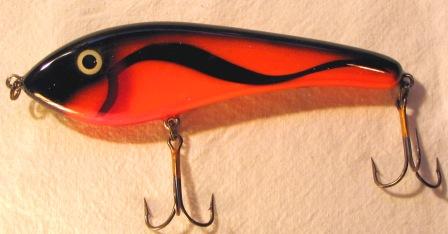
Posts: 155
Location: North Metro | YES!, Any animal that can establish a pattern during their life cycle can be conditioned to it's natural environment based on the effects of that environment. Those are basic Darwinian observations that also seem to be supported by scientific evidence... That is not just an opinion, but fact. | |
| | |
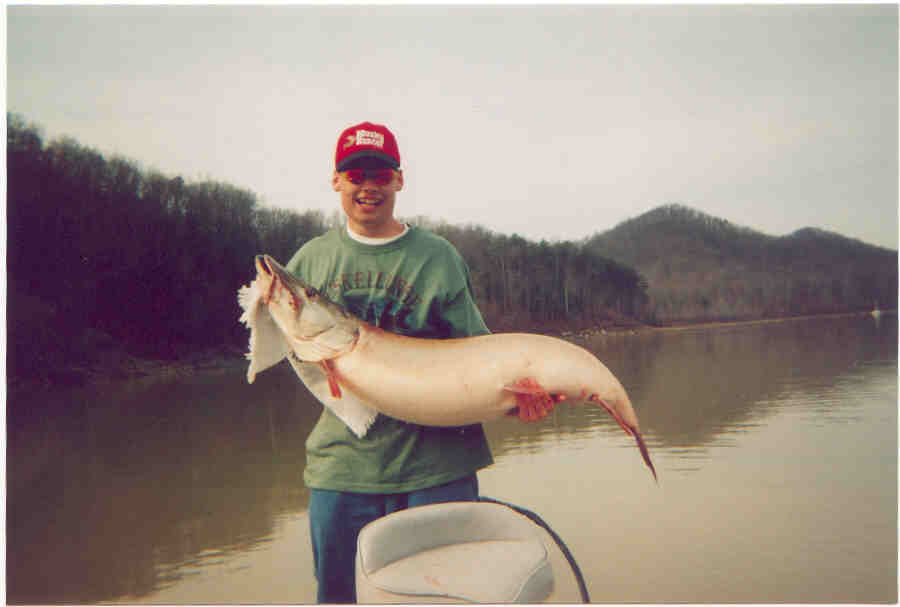
Posts: 1237
Location: South Portsmouth, KY | To a point i believe so. But then again go up Scotts creek this time of year at the cave with 30 boats all around you throwing rattle baits and still catching fish! | |
| |
|
 Do Muskies become conditioned?