|
|

Posts: 434
Location: searchin for 50 | What are the main differences in the oils that cost say $25 a gallon versus the stuff that costs $10 a gallon. |
|
| |
|
Posts: 50
Location: Park Ridge, Illinois | Good Question! OptiMax oil is $35.00 gallon at BPS, I use it because I hope it burns cleaner and does not foul my $25.00 spark plugs. |
|
| |
|

Posts: 742
Location: Grand Rapids MN | Raider you're going to hear a lot of different answers to this but I thought I would put out some insight. First thing to check is your owners manual and see if there is only one recommended oil or if they recommend an oil or another brand that meets a certain specification. There are occassions that there is some special formulation that is required but generally you can buy different products. Now here's where it gets a little deeper. When in doubt most people buy what ever brand oil from the manufacturer of their motor. Mercury oil for a Mercury engine for example. But remember Mercury doesn't make oil, they make engines. Mercury buys an oil from a supplier and has their name put on the package. In order to make money they may not buy the most premium oil out there, so you could not be receiving as high of quality oil that is justified by the price. Unfortunalely oil companies are not forced to disclose any quality specs or formulations on their oil, they just have to meet general specificiations which just tell you that an oil is compatible with a certain vintage engine. So there really isn't any information for you to get a hold of to make a good decision. That's why it's difficult for people to go outside the manufacturer brand name. And I don't blame them one bit. There is some information floating around out there but you have to know what you are looking for and looking at. Here's how oils are broken down.
Group I - is a conventional oil that has minimum refining. These are oils used back in the 1940's-1970's. Solvents were added to try to extract some of the aromatic rings. These rings allow oxidation and other oil breakdown modes. Don't see them much anymore.
Group II oils - are conventional oil that is put through a hydrotreat process. This is 1980's technology and what we see most today for conventional oils. These are further refined to remove more waxes & contaminants, control viscosity, and also further removed rings.
Group III oils - are a conventional oil that is put through a hydrocracking process. These are considered synthetic lubricants after a court battle was won between Mobil 1 and Castrol. This process breaks down some of the polymers to control polymer length, size, and structure. This is how they were able to say it was 'synthetic' because they changed the chemical properties and in doing so was considered 'man made' polymers. Still some waxes and aromatics remain but these are very good oils and highly refined. Most synthetic engine oils are this group.
Group IV oils - considered 'true' synthetic oils. These are 'man made' polymers, no crude oil was used. These engine oils are typically made of a PAO (polyalphaolefin) base synthetic and a co-base ester synthetic (either a diester or polyol ester). These have no waxes as found in crude/conventional oils and no aromatic rings. A PAO is completely saturated which means it does not like to mix with anything. That is why the ester co-base is used to disolve and hold the additive package. That is why they have higher temperature stability, water demulsification, and just a number of added properties. But synthetics cost more so that is the trade off.
There are only a few manufacturers of a Group IV oil on the market just because it is more cost effective to make a Group III and sell it a higher price like a Group IV. I'm not saying that a Group III isn't a good oil and not worth the money but for me I would rather pay the same price and receive a PAO. Mobil 1 and Amsoil are the only 2 that I know of that still make a PAO synthetic oil. For what we pay for boats and vehicles and how little capacity of oil they use it's worth spending the money for a good oil. If you have to change oil frequently because of other factors then it may be wiser to by a cheaper oil. A good maintenance plan goes further than buying an expensive oil.
I know this was more than you were asking for but I've seen a number of posts about this stuff at other sites and it gets ugly. Some are a Chevy guys other Fords, well the same goes for oils, some like Mercury, Valvoline, what ever and turns into a peeing match.
Hope this helps some!
Edited by Targa01 6/8/2007 12:46 PM
|
|
| |
|
Posts: 434
Location: searchin for 50 | Thanks  |
|
| |
|
Posts: 2091
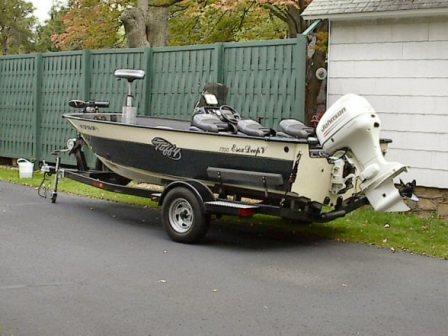
Location: Stevens Point, WI | I've been running Amsoil for the past few years now and noticed right away how much better my 2004 Johnson 90 hp runs with it. Definately less smoke and runs smoother. For my large investment in my Tuffy it's worth it. Same goes for synthetics in my Tundra, I only use Castrol Syntec. |
|
| |
|
| What do yo think of Cabela's semi syhthetic 2 stroke oil for a Merc 60 hrs. ? It costs the same as Mercs oil. Could it be actually better? |
|
| |
|
Posts: 742
Location: Grand Rapids MN | I personally don't spend money on semi-syn's just because of some of the product info I know about and the percentage of 'syn' in the mix is quit low. That goes back to not having any public product information on each oil to make better decisions. Semi syn's fill a nitch or a void between conventionals and synthetics. There are many who can't justify spending $6-7/qt for syn's and with conventionals being around $2 there is a huge gap. But people are willing to by a semi-syn at $3-4 just to feel like they are doing more for their vehicles. I'm not sure who makes the Cabelas oil so I can't say anything about it. In most cases when you buy a semi-syn you are paying a higher price to have for exampel 10% of a Group III (synthetic crude oil) to be added to conventional Group II oils. The majority of the oil is conventional $2 oil. If you do not want to spend the money on a syn then buy a conventional oil of a well known manufacturer or the recommend oil for your outboard. In general a well known manufacturer has spent a lot of time and money to get to that status and would not compromise this by putting out a low grade product that could cause problems. I would pick an oil and try to stick with it. Best advice I could give. |
|
| |
|

Posts: 364
Location: Kentucky | Targa,
Thanks for the great info, that's a very helpful summary.
My 1994 150hp 2 stroke Yamaha blew up a couple years ago and was rebuilt without VRO, so I mix my gas & oil. I've been sticking with what I guess you would call Group II, TW3, but the cheap stuff. You suppose I'd get any real benefit from using YamaLube or comparable? Maybe if I had a 4 stroke it would be more economical to use a Group IV, but I can't justify it when I'm mixing. |
|
| |
|
| I've been using Citgo oil which costs about $ 8 less a gallon than Mercs or Cabela's Semi synthetic which cost the same. |
|
| |
|
Posts: 742
Location: Grand Rapids MN | Sputterbug, I wish I could give you an answer on what to use but I don't have any information on those lubes. There are differences in the quality of base oil within a group and different formulations (types of additives and percentages) but it's difficult to say who is 'best.' Remember the base oil does the lubricating and provides the film strength to keep metal parts from contacting. Oils range in percentages but to give you a reference 90-95% of oils general is made of the base stock. Additives are mixed in to enhance certain oil characteristics and to make up for some areas it lacks in. You have antiwear additives (Zinc's/ZDDP, Boron, etc) and additives that make the oil last longer by slowing oxidation. But still it's the base oil that does the lubricating. So for me when I had to compare oils for my 2 stroke, Mercury oil and Amsoil Synthetic were the same price per gallon, I know I was getting a good base oil with the Amsoil. My motor did not call for any special single product so I knew I could venture outside their recommendations as long as it was a TW-3 oil. I'm not promoting Amsoil just giving my reasons why I use it. They are the only ones I know that make a PAO oil and it sells for a comparable price to other. Going with a synthetic means getting a better base oil but at a price. One warning though before everyone goes out and buys a PAO oil for their rigs. The PAO's require a co-base oil to add solubility for the additive package, well these co-bases will usually be an Ester. Esters are VERY GOOD cleaners, more so than the just detergents/dispercants used in conventional oils, so if you have higher miles on your rig (truck/boat) I would be cautious when switching to a PAO synthetic. If you have leaks it will clean those areas and make it leak worse. The new synthetics are very compatable with seals so that is not a concern but they will remove varnishes and sludges that could plug a filter or an oil passage. If your vehicle wasn't on a regular oil maintenance schedule I would maybe reconsider switching oils. As you can tell I get a little excited over this stuff (ya, I'm a geek) but I hope that some good has come out of this post. A good source for oil information is Noria. They have many publications and all their magazines are free. Interesting stuff! |
|
| |
|

Posts: 175
| Hey Targa
I am looking at Amsoil's website.
What is the difference between Saber (ATO) and HP Injector oil? Is it a simple as motor technology?
I have a Yami 225, old school (1999). It isn't HPDI. Which one is for me?
Thanks for your time and geek-dom.
CP |
|
| |
|
Posts: 742
Location: Grand Rapids MN | cphilli, I would contact someone at Amsoil and ask them their recommendations. Don't go to a supplier because they will just read the website to you. The first thing I noticed is the ISO VG (viscosity grade). The HP Injector is a much 'lighter' oil with a VG of 39.6, whereas the Saber is 141.2 VG. That is a considerable difference. I assume VG requirements for a DFI/EFI differs from a pre-mix lube. Anyways, the Saber is a 100:1 (pre-mix ony application) and the HP Injector is 50:1 mix and can be used in injection systems, again could be recommended because of the different viscosities. There is an application guide also you can click on and it will give you general guidelines for what their products are used for.
Edited by Targa01 6/11/2007 2:23 PM
|
|
| |
|
Posts: 175
| Targa
Received this back from Amsoil:
Thank you for contacting AMSOIL with your concerns.
In response to your inquiry, our AMSOIL HPI is recommended for oil injected engines.
Thank you again for the opportunity to respond to your concerns. As always, please feel free to contact us again if we can be of further assistance.
Sincerely,
Ed Kellerman
AMSOIL Technical Advisor
|
|
| |
|
Posts: 742
Location: Grand Rapids MN | cphilli,
There pretty easy to deal with and you can call their tech line and usually get someone right away. I have sat by Amsoil reps in 'lube school' and they seem to send a lot of their people through training. That's why I said to call them and not a supplier. Most places you have to contact a vendor and they pretty much know what's published. I've talked to them about ash content and other differences in their products and they have been pretty helpful. Of course they can't give me indepth details but they will give you a fair answer. |
|
| |
 2 Cycle oil